565
Born preterm
Children born prematurely across a range of gestational ages and respiratory outcomes.
Respiratory Health Outcomes in Neonates (RHiNO) was established to understand why some children born preterm develop respiratory symptoms and reduced lung function, how these abnormalities can be characterised, and whether they can be treated.
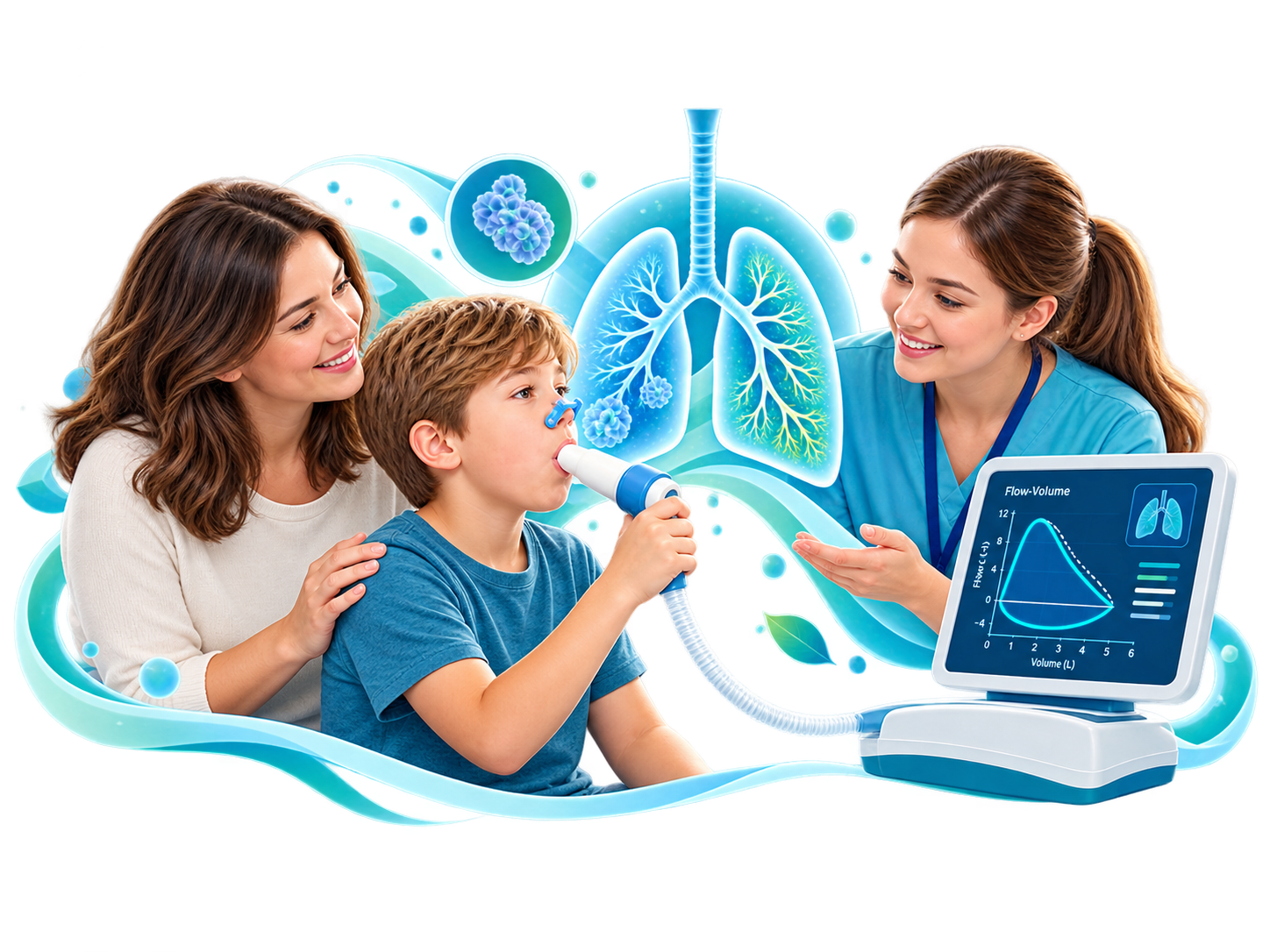
RHiNO studied children aged 7–12 years to determine why children born preterm have more respiratory symptoms and lower lung-function measurements than children born at term. The programme combined population screening with detailed physiological assessment, a randomised inhaler trial and advanced lung imaging.
Earlier Welsh studies used large-scale questionnaires to investigate respiratory and neurodevelopmental outcomes after preterm birth. Approximately 26,000 questionnaires were sent and around 7,000 responses created the population foundation for subsequent RHiNO research.
Families were invited into a more detailed programme combining symptoms, spirometry, bronchodilator response and subsequent specialist physiological assessment.
RHiNO has evolved into a programme studying prematurity-associated lung disease, its physiological phenotypes, mechanisms, treatment responses and trajectories towards adulthood.
RHiNO deliberately included children born preterm with a range of later respiratory outcomes, together with term-born comparison participants. This allowed the programme to separate the effects of preterm birth from the physiological patterns found later in childhood.
Children born prematurely across a range of gestational ages and respiratory outcomes.
Comparison participants studied using the same core respiratory assessments.
Preterm-born children with reduced lung function entered the three-month treatment trial.
Children travelled to Sheffield for specialist hyperpolarised-gas lung MRI.
Respiratory symptoms, health history and relevant early-life information.
Standardised measurement of expiratory airflow and response to bronchodilator.
Further lung-function testing, exercise assessment and detailed respiratory phenotyping.
A three-month randomised trial of inhaled therapies used commonly in asthma.
Specialist radiation-free hyperpolarised-gas imaging to examine regional lung structure and function.
Large-scale questionnaire research establishes persistent respiratory effects after preterm birth.
Childhood respiratory assessments start across Wales.
Spirometry, bronchodilator testing and detailed physiology characterise later respiratory impairment.
Selected children enter the treatment trial and 65 undergo advanced lung MRI.
The programme shifts from recruitment to analysis, publication and follow-up.
Combined ICS/LABA improves lung function in selected preterm-born children with reduced FEV₁.
Phenotyping, MRI, pollution, metabolomics and respiratory-mechanics studies expand the programme.
The Lancet Respiratory Medicine Series integrates PLD phenotypes, trajectories and management.
RHiNO is studying how lung function and PLD phenotypes evolve through adolescence towards adulthood.
Completion of the original study visits did not mark the end of RHiNO. The cohort has continued to generate new knowledge on PLD phenotypes, inhaled treatment, exercise, advanced imaging, air pollution, metabolomics and respiratory mechanics.
The next phase is increasingly longitudinal: understanding which physiological abnormalities persist, which change as lungs grow, and which may be modified to improve future respiratory health.
Recruitment is complete, but the original parent and child information sheets, consent/assent materials, questionnaires and descriptions of study visits remain an important record of how RHiNO was conducted.
Historical information about visits, breathing tests, exercise testing and MRI.
View participant archive →Explore the scientific outputs generated from the RHiNO programme.
Browse publications →See the major findings explained in accessible language.
Explore discoveries →Azithromycin Therapy for Chronic Lung Disease of Prematurity
Visit AZTEC ↗Preventing respiratory infections after discharge
Visit BALLOON ↗Respiratory Health Outcomes in Neonates
RHiNO home →